
1B — Basic Parts of the Brain
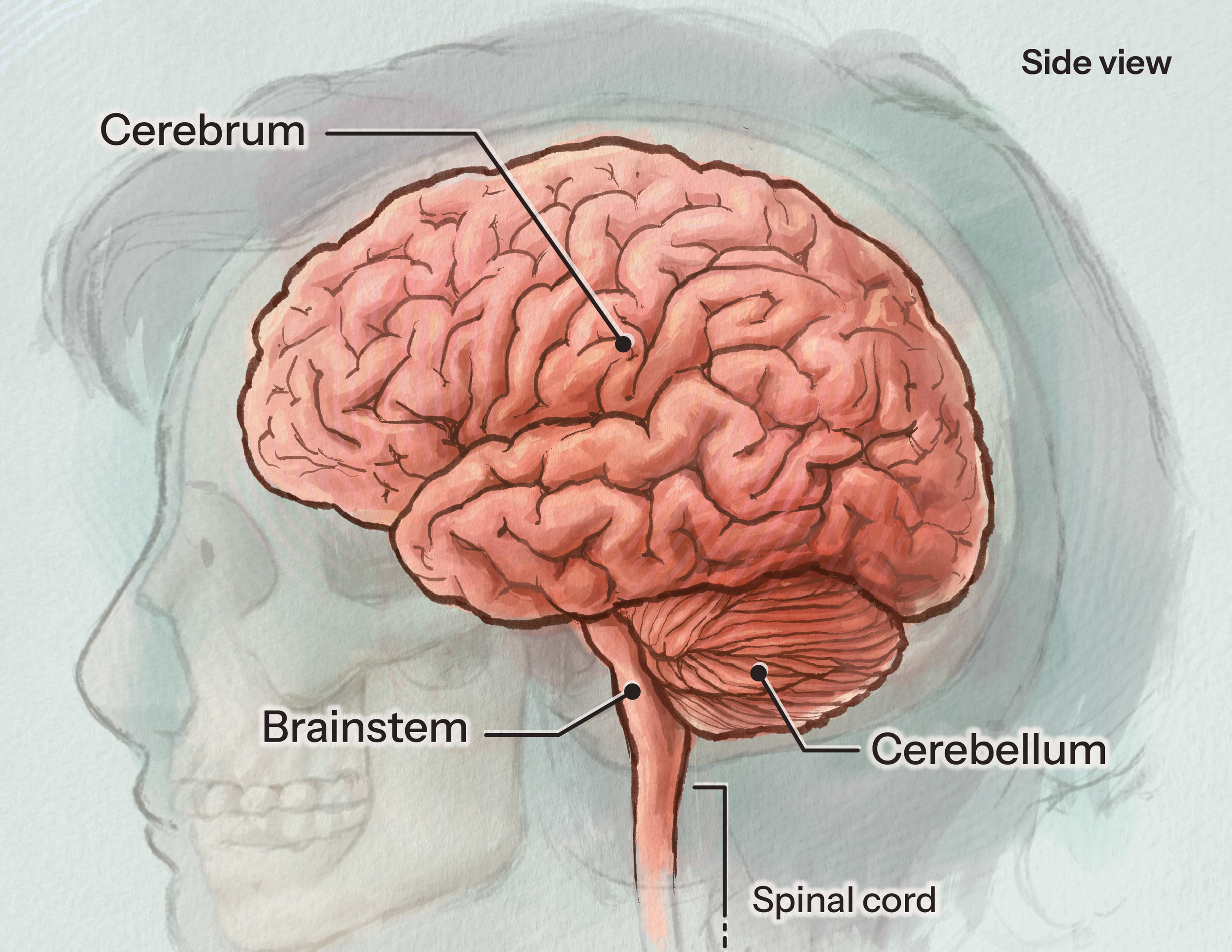
The brain sits safely inside the skull and connects to the spinal cord. Together, they form the central nervous system, which carries messages between the brain and the rest of the body.
Side view
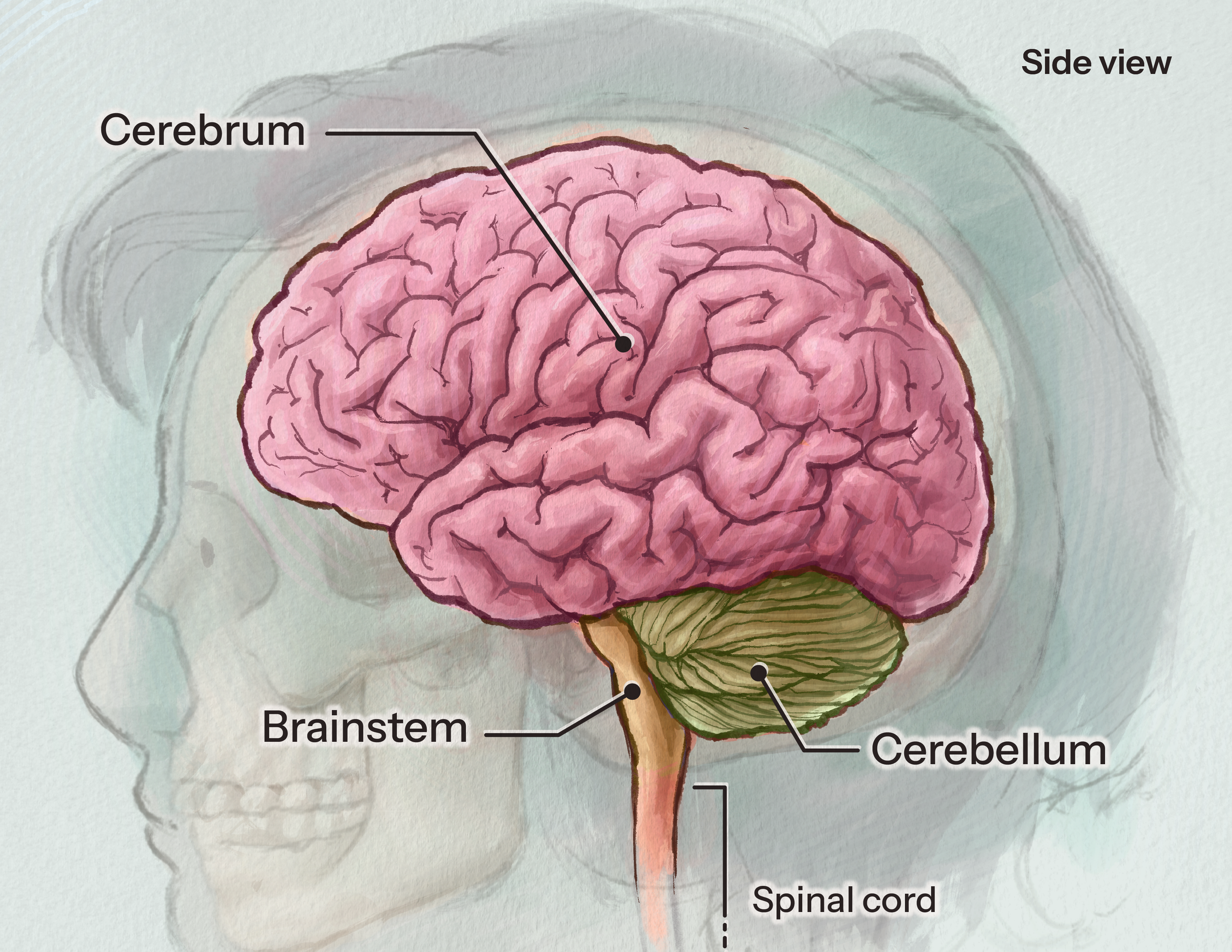
The brain has three main parts: the cerebrum, the cerebellum,
and the brainstem.
Side view
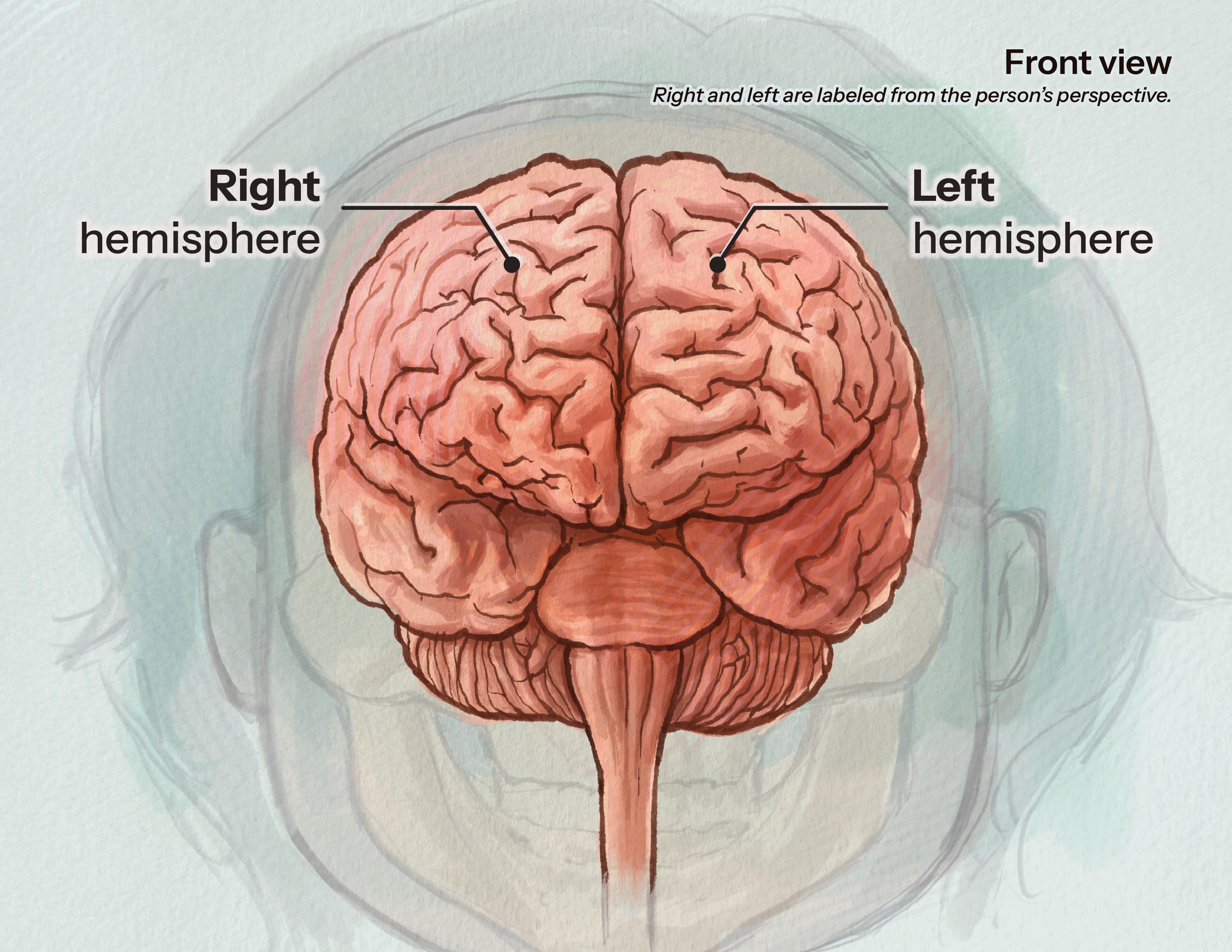
The cerebrum is the largest. It helps us think, learn, speak, and feel emotions. It has two halves—the left and right hemispheres—that work together to process information and make sense of the world.
The cerebellum sits at the base of the brain and helps coordinate movement and balance.
The brainstem connects the brain to the spinal cord. It looks after the body’s basic functions, like breathing, heartbeat, and digestion—the things that keep us alive without us even having to think about them.
Front view
Cross section, front view
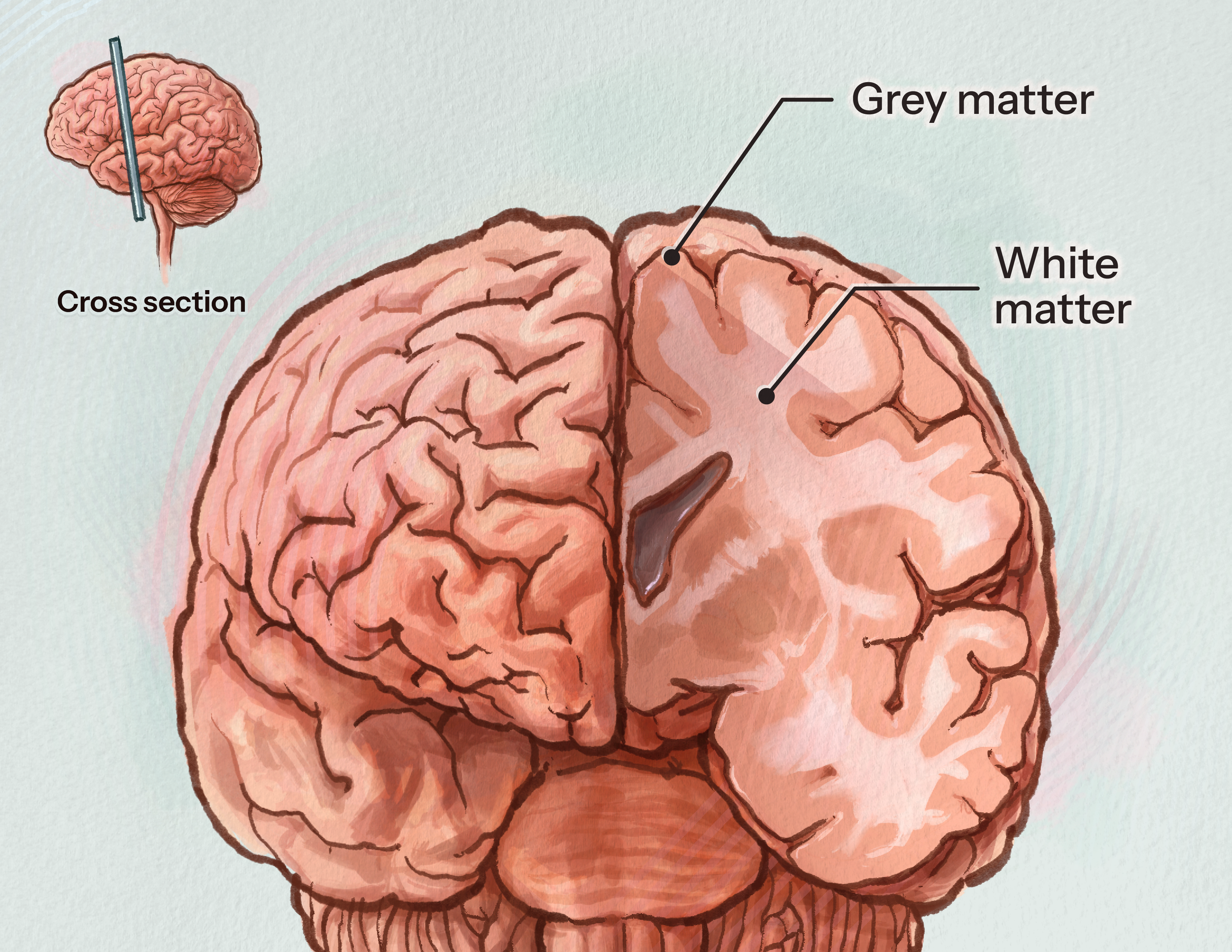
The brain is also made up of two main types of tissue.
Grey matter supports information processing, while white matter carries signals that connect different parts of the nervous system.
Each of these regions has areas of specialization, but they operate as part of a larger integrated system.